Monday, August 1, 2022

Motorbike Study in HeavyPaint – Painted at the Design Museum in Barcelona


This motorbike painting was done during a visit to the Design Museum in Barcelona, a place that’s always full of visual inspiration. I came across an old model on display and decided to do a quick study of it on the spot using HeavyPaint.


One of the things I really enjoy about HeavyPaint is its minimalist interface. There’s no clutter, just room to focus on shape, value, and color. It forces you to simplify and commit, which makes it ideal for quick studies or stylized explorations.


The brush engine is chaotic in the best way. Some tools feel unpredictable at first, but once you embrace the quirks, they become expressive and responsive. It’s less about control and more about rhythm and instinct, which made it perfect for capturing the energy and form of the motorbike without getting stuck in detail.


This wasn’t about realism, but about feeling, blocking in the silhouette, playing with contrast, and letting the shapes talk. Painting it directly at the museum, surrounded by industrial design and history, definitely added something to the experience.


Looking forward to doing more like this. HeavyPaint continues to surprise me in all the right ways.

Friday, July 29, 2022

Three Digital Paintings – Capturing Different Moments of the Day


Recently, I completed three digital paintings, each one focused on capturing a different moment of the day: morning, afternoon, and evening.


The goal wasn’t to overcomplicate the compositions, but to study how light, color temperature, and mood shift over time. It’s a simple exercise, but one that really sharpens your sensitivity to atmosphere.

  • The morning scene was about softness and cooler light, where colors are still muted and everything feels a little slower and quieter.

  • The afternoon painting captured stronger contrasts, warmer tones, and the more direct, clear light that brings sharper edges and deeper shadows.

  • The evening piece focused on the heavy, saturated hues of sunset, and the way light fades into a deeper, more atmospheric palette.


I approached all three using the same brush set and limited layers, focusing on getting the mood right first before adding any extra detail.

These quick studies are a reminder that even a simple subject can completely change character depending on the time of day, and that light really is one of the most powerful storytelling tools an artist has.

Looking forward to doing more of these.

Thursday, February 3, 2022

Taking Care of Yourself as an Artist: Why Rest, Movement, and Connection Matter

artist self-care, how artists avoid burnout, health tips for digital artists, creative lifestyle balance, mental health for creatives, staying healthy as an artist, art and wellness tips, physical health for artists, setting boundaries for creatives
As artists, we're often so focused on improving our skills, meeting deadlines, or pushing through the next project that we forget one of the most important tools we have: ourselves. The mind and body that create the work are not separate from the creative process; they ARE the creative process.

In a world that often romanticizes burnout and late-night hustle, it's easy to undervalue rest, movement, and human connection. But if there's one thing I've learned over the years, it's that taking care of yourself isn't a luxury. It's a necessity.

Rest is part of the process
Creative work is mentally demanding. Giving yourself time to unplug, sleep well, or even just step away from the canvas or screen for a while isn't being lazy, it's recharging your mental energy. 

Many breakthroughs come not when you're grinding, but when you're allowing your mind to breathe. Build short breaks into your daily schedule and longer rest periods into your months. Think of them as maintenance, not interruption.

Your body is your studio
Long hours at a desk or tablet can take a real toll. Back pain, eye strain, and stiffness aren’t just annoyances; they can slow you down and, over time, cause lasting issues. A bit of regular physical activity, stretching, or even a walk can refresh your posture and your perspective. 

Consider building a short movement routine into your day, like a 5-minute stretch between projects or a lunchtime walk. Better yet, find a physical activity you enjoy, whether it's dancing, swimming, or climbing, something that gets you out of your chair and into your body.

Reconnecting with nature and people
A change of scenery and good conversation can reawaken something deep in you. 

Whether it’s spending time outdoors, sharing ideas with fellow creatives, or simply catching up with a friend, human moments refill your emotional palette. Make time for nature walks, social meetups, and community events; they offer perspective and spark creativity in ways that screen time can’t.

Nutrition and hydration: the invisible fuel
Your brain and body need proper fuel to function at their best. 

Skipping meals, living on caffeine, or ignoring hydration can silently sabotage your energy and focus. Eat balanced meals and keep water nearby, your clarity of thought (and drawing hand) will thank you.

Setting boundaries between work and life
When your work is also your passion, it's easy for the two to blur. But maintaining a boundary, even a loose one, between your professional and personal time can help prevent burnout. 

Create start and end rituals for your workday, avoid working late every night, and let your brain shift gears when you're off the clock.

Mental health is creative health
Anxiety, depression, and imposter syndrome are unfortunately common in the creative field. Don't ignore them. 

A strong support network, regular check-ins with yourself, therapy if needed, or even journaling can be powerful tools to keep your mental space healthy. 

The more you invest in your emotional well-being, the more sustainably you can create.

Celebrate progress, not just output
In a fast-paced digital world, it's easy to tie your value to likes, shares, or output speed. But the creative path is long and non-linear. 

Celebrate your learning, your risks, and your consistency, not just the polished work you publish.


We often treat creative output like a sprint, but it’s more of a rhythm. Give yourself permission to rest, to move, and to connect. 

Take care of your physical and emotional health as intentionally as you do your craft. Because in the long run, it’s not just your art that benefits, it’s your whole life.


#ArtistWellbeing #CreativeHealth #TakeCare #ArtAndLife #RestAndCreate #SimonLocheArt

Thursday, January 20, 2022

Joining Microsoft Xbox Activision Blizzard King – A New Creative Chapter


I’m excited to share a new and meaningful milestone in my professional journey: I’ve joined Microsoft Xbox Activision Blizzard King, where I’m now part of the New Games department, a space dedicated to developing the next generation of creative and innovative gaming experiences.


While I can’t reveal project details just yet, I can say that the work we’re doing is as exciting as it is ambitious. The opportunity to contribute to a team focused on pushing the boundaries of what games can be, both in terms of design and artistic vision, is something I’m incredibly proud of.


What makes this experience even more rewarding is the chance to collaborate with incredibly talented individuals across disciplines. Being surrounded by passionate creatives who challenge and inspire one another every day is both a privilege and a powerful motivator.


This new role allows me to apply everything I’ve learned over the years while continuing to evolve as an artist, leader, and creator. It’s a chance to grow, to experiment, and to help shape experiences that are emotionally rich, visually striking, and deeply engaging.


There’s a lot more to come, and I can’t wait to share more when the time is right.


Stay tuned!


#GameArt #MicrosoftXbox #ABK #GameDevelopment #CreativeLeadership #NewGames #BehindTheCanvas

Tuesday, June 8, 2021

Video Games Industry: How to Get Hired as a Concept Artist


Breaking into the video game industry as a concept artist can feel overwhelming. With so many talented individuals competing for the same roles, it’s important to understand what studios are actually looking for and how to stand out in a competitive field. Whether you're just getting started or looking to sharpen your approach, here are key strategies to help you get hired.


1. Build a Focused, Purposeful Portfolio
Your portfolio is your calling card. It should showcase your strongest work and demonstrate your understanding of visual storytelling, design thinking, and functionality within a game pipeline. Tailor your portfolio to the role you're applying for: if it's an environment concept art position, focus on environments. Include callouts, sketches, design iterations, and process, not just polished illustrations.

2. Study the Studios You Want to Work For
Every studio has a style, tone, and design philosophy. Spend time analyzing the art direction of the games they create and build personal projects that align with their visual language. This shows that you understand their needs and are ready to contribute.

3. Develop Strong Fundamentals
A strong grasp of anatomy, perspective, light, color, and composition is non-negotiable. These are the foundation of all great concept art. Continue practicing regularly, even outside of your portfolio pieces. Lifelong learning is key.

4. Understand the Production Pipeline
Concept art is not just about beautiful images; it’s about communicating ideas clearly to 3D artists, designers, and animators. Show that you can think like a designer and solve visual problems. Awareness of game engines, asset modularity, and practical constraints can make you much more valuable.

5. Network and Get Your Work Seen
Share your art consistently on platforms like ArtStation, Instagram, and LinkedIn. Join Discord groups, online communities, and forums where game artists gather. Attend industry events, online workshops, or portfolio reviews. Opportunities often come from visibility and connection.

6. Stay Professional and Prepared
Have a resume and a short, clear introduction about yourself. Be ready to explain your process, how you take feedback, and what you love about game development. Studios are hiring a team member, not just a skill set.

7. Stay Resilient and Keep Evolving
Rejection is part of the journey. Keep improving, stay adaptable, and be honest about where your weaknesses are. Each piece you create and each application you send is a step closer to your goal.


Hiring a concept artist in the game industry is about more than talent. It’s about mindset, discipline, and clarity. Focus on what you can control, your portfolio, your fundamentals, and your visibility, and you’ll be well on your way.

#ConceptArtCareer #GameIndustryTips #HowToGetHired #PortfolioAdvice #VisualDevelopment #SimonLocheArt

Monday, May 3, 2021

5 Best Sketchbooks for Artists (and Why They’re Worth Using)

Choosing the right sketchbook can make a big difference in how often you draw, how free you feel to experiment, and how your materials perform on the page. Not all sketchbooks are created equal, some are better for ink, others for watercolor, and some are perfect for carrying everywhere. Here are five of the best sketchbooks I’ve used, and why each one has earned a place on my shelf (and in my bag).

1. Moleskine Art Sketchbook
A classic for a reason. Moleskine’s sketchbooks have smooth, heavyweight paper that handles pencil, ink, and light washes well. The hardcover makes it portable and durable, and the elastic band keeps everything secure. It’s not ideal for heavy media like watercolor or oil, but it’s perfect for everyday sketching and ideation.

best sketchbooks for artists, sketchbook review, top sketchbooks for drawing, watercolor sketchbooks, sketchbooks for pen and ink, daily sketchbook recommendations, how to prime sketchbook pages, gesso for sketchbooks, painting in a sketchbook

2. Stillman & Birn Beta Series
If you want to paint in your sketchbook, this one’s for you. The Beta Series has 270 gsm cold-press paper that takes watercolor beautifully without buckling. It’s also great for gouache, markers, and mixed media. Available in hardcover or softcover, spiral or stitched, it’s a workhorse for any serious sketcher.

best sketchbooks for artists, sketchbook review, top sketchbooks for drawing, watercolor sketchbooks, sketchbooks for pen and ink, daily sketchbook recommendations, how to prime sketchbook pages, gesso for sketchbooks, painting in a sketchbook

3. Strathmore 400 Series Sketchbook
This is an affordable, accessible option with solid performance. The paper has just enough texture for pencil and pen work, and it’s great for gesture drawing, figure study, or daily warm-ups. It’s not meant for wet media, but it’s excellent for volume sketching without worrying about cost.

best sketchbooks for artists, sketchbook review, top sketchbooks for drawing, watercolor sketchbooks, sketchbooks for pen and ink, daily sketchbook recommendations, how to prime sketchbook pages, gesso for sketchbooks, painting in a sketchbook


4. Hahnemühle Nostalgie Sketchbook
This one has ultra-smooth, bright white paper that’s fantastic for fine liners, technical pens, and graphite. It’s also compatible with markers and light washes. It has a minimal, elegant aesthetic and lies flat, making it a pleasure to use in the studio or on location.

best sketchbooks for artists, sketchbook review, top sketchbooks for drawing, watercolor sketchbooks, sketchbooks for pen and ink, daily sketchbook recommendations, how to prime sketchbook pages, gesso for sketchbooks, painting in a sketchbook

5. Pentalic Traveler Pocket Sketchbook
For sketching on the go, this one is hard to beat. Compact, with a durable cover and elastic closure, it fits in a bag or jacket pocket easily. The paper holds up well to pencil, pen, and even light ink washes. It’s a great companion for urban sketching or travel journaling.

best sketchbooks for artists, sketchbook review, top sketchbooks for drawing, watercolor sketchbooks, sketchbooks for pen and ink, daily sketchbook recommendations, how to prime sketchbook pages, gesso for sketchbooks, painting in a sketchbook


Mini Tutorial: How to Prime Your Sketchbook Pages for Heavier Paint Techniques

If you want to use acrylics, heavy gouache, or oils in a sketchbook not built for them, you can prepare the pages with gesso to give them more strength and absorbency. Here’s how:

  1. Clip or tape your sketchbook open so the page lies flat.

  2. Apply a thin, even coat of acrylic gesso with a wide flat brush or foam brush.

  3. Let it dry completely (usually 10–15 minutes).

  4. Optionally, add a second coat for extra strength.

  5. Once dry, lightly sand with a fine-grit sandpaper if you want a smoother surface.

This helps prevent buckling and improves paint adhesion, letting you treat your sketchbook like a mini canvas.


Ultimately, the best sketchbook is the one you actually use. Whether you prefer texture or smoothness, portability or space, there’s a sketchbook out there that fits your process. Try a few, see what suits you, and most importantly, keep drawing.

#Sketchbooks #ArtTools #DrawingGear #ArtSupplies #TraditionalArt #SimonLocheArt

Monday, April 19, 2021

Digital Landscape – Ciutadella Park Study with Infinite Painter


This landscape study was done in Ciutadella Park in Barcelona, using Infinite Painter on the iPad. Painted in 2021, it was a quick session focused on capturing light, shapes, and atmosphere.

Ciutadella is one of those places where the balance between architecture, nature, and movement makes it perfect for observational studies. I kept the brushwork loose, using just a few values and broad shapes to build structure without overworking the composition.

Infinite Painter remains one of my favorite tools for this kind of sketch,fast, responsive, and just enough flexibility to stay focused on the essentials.


A simple study.


Sunday, April 26, 2020

Essential Life Drawing Resources for Artists

Art by Ryan Woodward

Strong figure drawing skills are the foundation of good visual storytelling

Whether you’re working in concept art, illustration, animation, or simply trying to sharpen your observational skills, life drawing remains one of the most valuable practices you can invest time in.

But not everyone has regular access to live figure drawing sessions, and that’s where online resources come in. Over time, I’ve gathered a set of go-to websites that offer high-quality life drawing references. Each one brings something slightly different to the table, depending on what you’re looking to practice.


Here’s a breakdown of the best online resources for life drawing:


Top Life Drawing Reference Websites

PoseSpace

https://www.posespace.com

A reliable source for high-resolution, artist-focused photography. PoseSpace offers a wide range of models, diverse poses, and carefully lit setups. Some poses even include full 360-degree rotations, which is a huge help when you want to study form and volume properly.


Line of Action

https://www.line-of-action.com

Perfect for quick gesture practice. Line of Action lets you set up timed figure drawing sessions, focusing on capturing movement, energy, and proportion. You can also explore categories like hands, feet, animals, and faces.


QuickPoses

https://www.quickposes.com

If you want to train speed and instinct, QuickPoses is ideal. The platform pushes you to work through a high volume of sketches in a short time, helping build fluidity and confidence in your strokes.


Croquis Cafe

https://croquis.cafe/

Croquis Cafe brings the feel of a real-life figure drawing session to your screen. Their free videos simulate studio sessions with live models, timed poses, and consistent quality. It’s one of the closest substitutes for an actual drawing class if you’re working from home.


AdorkaStock

https://www.adorkastock.com

For more expressive, dynamic, and storytelling-driven poses, AdorkaStock is a great option. The poses are often animated, dramatic, or exaggerated, making them perfect for character work, comic art, and animation studies.


SenshiStock

https://www.senshistock.com

Focused on action, movement, and fantasy poses, SenshiStock is great for artists who want references that feel lively and filled with narrative energy. Lots of free pose sequences and motion packs are available.


New Masters Academy (Subscription)

https://www.nma.art

If you’re serious about academic study, New Masters Academy is one of the best investments you can make. Their professional-quality model references and figure drawing videos bring classical art training into your workspace.


Which One Should You Use?

Each site has its strength:

  • Quick gesture warm-ups: Line of Action, QuickPoses

  • Detailed anatomy studies: PoseSpace, New Masters Academy

  • Dynamic storytelling poses: AdorkaStock, SenshiStock

  • Simulated studio sessions: Croquis Cafe

Mixing different types of references into your practice keeps your skills flexible and sharp.


Final Thought

Mastery in figure drawing doesn’t happen by accident. It’s built quietly, through repetition, focused observation, and constantly challenging your hand and eye to work together. These online resources make it easier to stay consistent, even without access to a live model.

Use them well, draw often, and remember: every sketch, no matter how quick or rough, moves you forward.


#LifeDrawing #FigureDrawing #ArtPractice #ArtResources #GestureDrawing #SimonLocheArt


Tuesday, January 7, 2020

Talking Tom Sky Run – Concept Art and Building a New Vision

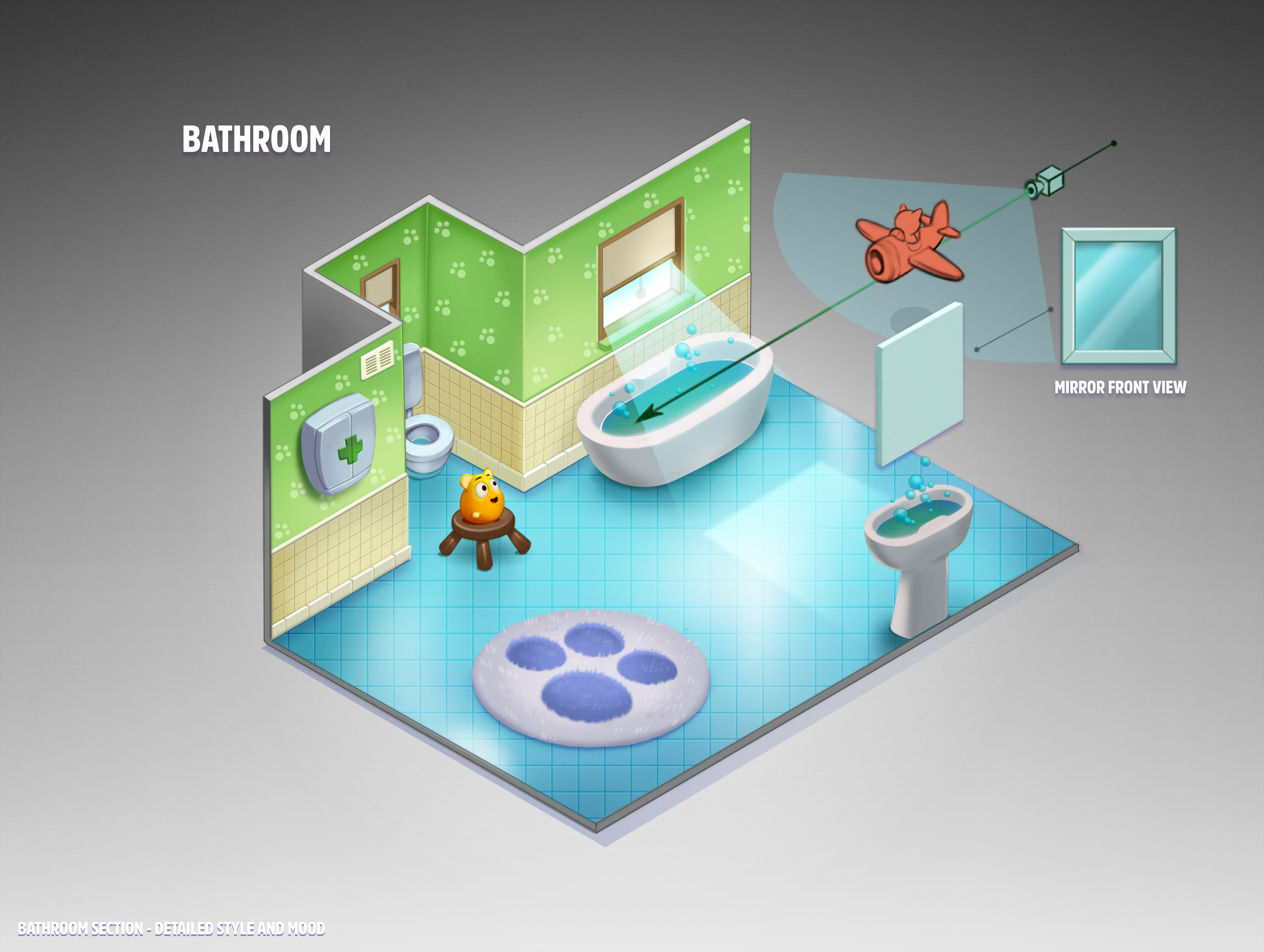
Back in 2019, I had the opportunity to join Outfit7 to help establish a brand-new studio in Barcelona. One of the key projects I worked on during that time was Talking Tom Sky Run, a fresh take on the globally popular My Talking Tom IP.

The challenge was clear: innovate.

Rather than following the established formula of classic runner games, the goal was to reimagine the experience, offering players something freer, more dynamic, and distinctly different. Talking Tom Sky Run introduced a flying-plane runner concept, something that broke away from traditional linear gameplay and opened up new possibilities for movement, style, and world-building. 

Although my time at Outfit7 was relatively brief, the project was an exciting and rewarding challenge. Beyond the gameplay innovation, it was also about building a new team, aligning creative directions, and setting the visual foundation for a fresh branch of an already successful franchise. Being part of the early stages of something new, helping shape it from the ground up, remains one of the most memorable highlights of my career.

Throughout the project, I worked on multiple concept pieces to flesh out the look and tone of the game. From early environment ideas to mood explorations and gameplay visualization, each concept was aimed at supporting a vision that felt both familiar to fans and fresh enough to stand out.

Sharing here several of those concepts to give a deeper look into the visual development work behind the scenes.


#GameArt #ConceptArt #TalkingTomSkyRun #Outfit7 #VisualDevelopment #SimonLocheArt

Thursday, January 2, 2020

Digital Painting Studies of John Singer Sargent in Procreate

John Singer Sargent study, digital painting master studies, Procreate portrait painting, Sargent digital art, how to study master painters, digital art fundamentals

John Singer Sargent study, digital painting master studies, Procreate portrait painting, Sargent digital art, how to study master painters, digital art fundamentals

John Singer Sargent study, digital painting master studies, Procreate portrait painting, Sargent digital art, how to study master painters, digital art fundamentals

John Singer Sargent study, digital painting master studies, Procreate portrait painting, Sargent digital art, how to study master painters, digital art fundamentals

There’s something about the boldness and confidence of John Singer Sargent’s brushwork that continues to challenge and inspire me. As a long-time admirer of his portrait work, I decided to spend some focused time doing a series of digital studies of his paintings using Procreate on the iPad.

The goal wasn't to replicate the pieces perfectly (even though I think I got pretty close), but to understand the choices behind his lighting, edge control, and value grouping, and to see how those choices translate into a digital format.

Working in Procreate allowed me to zoom in on details, study color temperature shifts, and break down how Sargent used simplicity and restraint to suggest complexity. Even in quick sessions, there’s a lot to learn from how he treated fabric, skin, and background with just a few well-placed strokes.

These studies reminded me how valuable it is to step back from original work and revisit the fundamentals through the lens of a master. And while nothing replaces the tactile experience of oil paint, working digitally let me experiment more freely and focus on observation without being bogged down by setup.

More of these are coming soon. There’s still plenty to absorb from one of the greats.

#JohnSingerSargent #DigitalPainting #ProcreateStudy #MasterStudies #ArtPractice #PortraitArt #SimonLocheArt


ShareThis